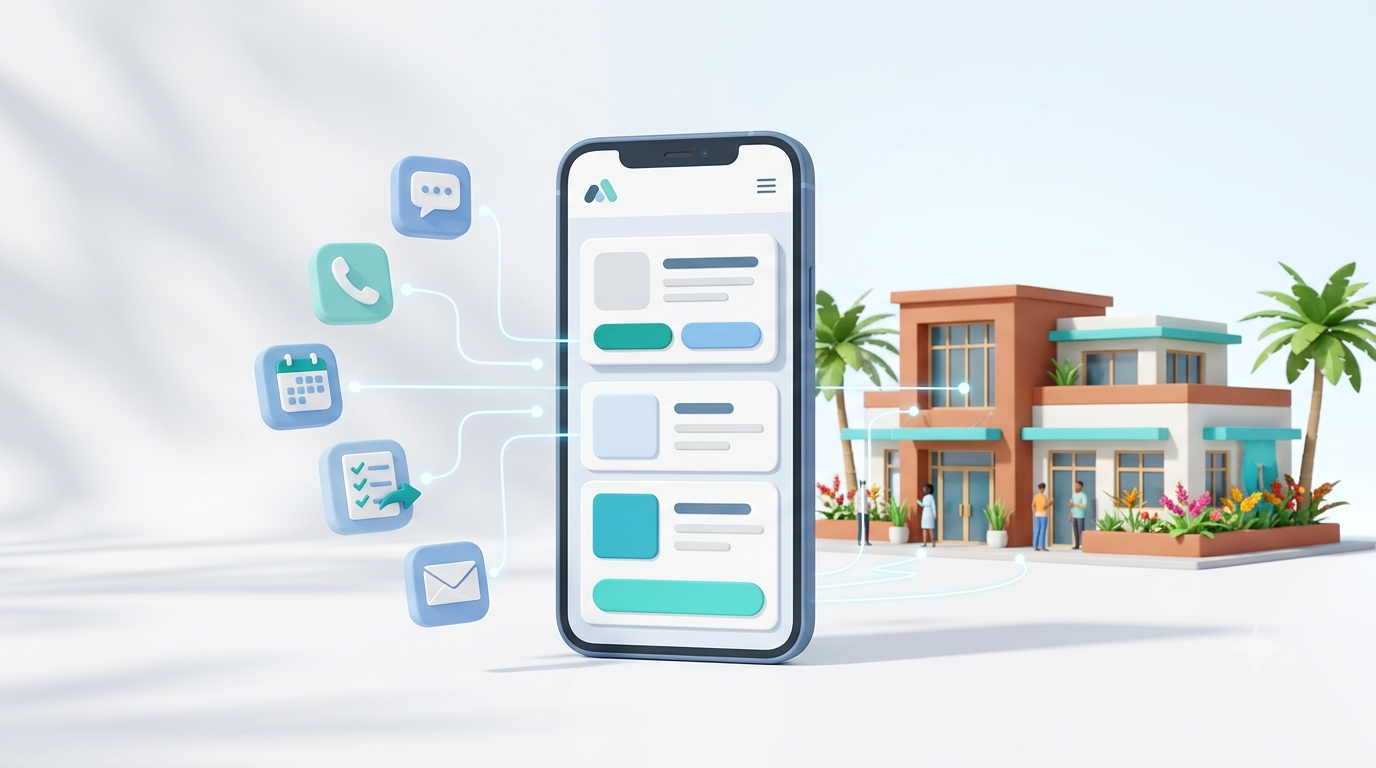
Most customers in Barbados are browsing, searching, and buying directly from their phones. If a website doesn’t work smoothly on mobile, those visitors rarely stay long enough to become leads. A strong mobile-first design changes that completely by improving usability, speed, and conversions. This article explains how mobile-first design helps Barbados businesses attract more traffic, generate higher-quality leads, and stay competitive in a mobile-driven digital market.
The Shift Toward Mobile-First in Barbados
The way people interact with businesses in Barbados has changed dramatically. Smartphones are now the primary device for searching local services, comparing products, and making purchase decisions. This shift has made mobile-first design more than a trend, it has become a necessity.
A mobile-first approach means designing websites for mobile devices before adapting them to desktop screens. Instead of shrinking a desktop site, the experience is built around mobile behavior from the start. For Barbados businesses, this approach directly supports better engagement and stronger lead generation optimization.
At the same time, user expectations have increased. Visitors expect fast loading, simple navigation, and smooth interactions. If a website fails to meet these expectations, potential customers leave within seconds, often never returning.
Mobile Traffic Dominance and Its Impact on Local Businesses
One of the biggest reasons mobile-first design matters is mobile traffic dominance. In many Caribbean regions, including Barbados, the majority of web traffic comes from smartphones. This means your website is no longer competing on desktop, it is competing in a mobile environment where attention spans are shorter and decisions are faster.
This shift is part of a larger Caribbean small business digital transformation, where traditional businesses are moving online to reach customers where they already are. For many local companies, their website is now the first point of contact with potential customers.
If that first experience is slow or confusing, it weakens trust and reduces conversions. But when a website is optimized for mobile, it becomes easier for users to take action whether that means calling, booking, or making a purchase.
Mobile Usability and User Experience That Drives Leads
At the center of mobile success is mobile usability. This refers to how easy it is for users to navigate, interact, and complete tasks on a mobile device. A website can have great content, but if buttons are too small or pages are difficult to scroll through, users will leave quickly.
Strong mobile-friendly websites are designed with simplicity in mind. Everything is easy to find, read, and interact with. This is where mobile user experience (UX) becomes critical. A good mobile UX removes friction and helps users move naturally from browsing to conversion.
Design details like spacing, layout, and readability all contribute to this experience. Even small improvements can significantly increase engagement.
Another important factor is touch-friendly interface design. Mobile users interact using fingers, not a mouse, so buttons need to be large enough, menus must be easy to tap, and spacing should prevent accidental clicks. When this is done well, users feel more comfortable and confident navigating the site.
Speed and Performance: The Silent Conversion Driver
Speed plays a major role in whether a visitor becomes a lead. Fast-loading mobile websites are not just preferred, they are expected. If a page takes too long to load, users often abandon it before it even appears.
This is where website performance optimization becomes essential. Optimizing images, reducing unnecessary scripts, and improving server response times all contribute to a smoother experience.
Google also evaluates performance using Core Web Vitals, which measure loading speed, interactivity, and visual stability. These metrics directly influence search rankings, which means performance affects both visibility and conversions at the same time.
For Barbados businesses competing locally, even a small improvement in speed can result in noticeably higher engagement and better lead quality.
Mobile SEO and Google Visibility
Modern websites must also consider how search engines view mobile performance. Google now uses Google mobile-first indexing, meaning it primarily evaluates the mobile version of a website when determining rankings.
This makes search engine optimization (SEO) for mobile a key part of any digital strategy. A website that performs well on mobile is more likely to rank higher, attract more traffic, and generate more leads.
When combined with strong mobile UX and fast performance, mobile-first design becomes a powerful SEO advantage. It ensures that businesses are not only visible but also competitive in search results.
Mobile Conversion Rate Optimization (CRO) and Lead Growth
Getting traffic is only part of the equation. Turning that traffic into leads is where real growth happens. This is where mobile conversion rate optimization (CRO) becomes important.
Mobile users behave differently from desktop users. They make faster decisions, expect instant access to information, and are more likely to abandon complex processes. Understanding mobile shopping behavior helps businesses design experiences that match these expectations.
A major factor in this process is the mobile checkout experience. If a checkout form is too long, slow, or confusing, users will leave before completing a purchase or inquiry. Simplifying forms and reducing steps can significantly improve conversion rates.
For ecommerce businesses, improving mobile-first e-commerce design leads directly to ecommerce mobile sales growth. Even small UX improvements can have a measurable impact on revenue.
Mobile UX Strategy That Turns Visitors Into Leads
A strong mobile-first UX strategy focuses on guiding users toward action with minimal friction. This includes clear navigation, simple layouts, and visible call-to-action buttons.
Mobile website navigation design plays a major role here. Menus should be easy to access and structured logically so users can find what they need quickly. Hidden or overly complex navigation reduces engagement and increases bounce rates.
For local Barbados businesses, this is especially important. Many users visit websites looking for quick actions like calling a business, getting directions, or submitting a form. A well-structured mobile experience makes these actions effortless.
Lead generation improves when websites are designed with intent in mind. Every page should guide users toward contact, inquiry, or purchase without unnecessary distractions.
Mobile-First E-Commerce and Sales Performance
For online stores, mobile-first e-commerce design is no longer optional. Most users now browse products on their phones, compare prices, and complete purchases directly from mobile devices.
If product pages are not optimized for mobile, businesses lose potential revenue. High-quality images, simple layouts, and fast-loading pages all contribute to better engagement.
As mobile experiences improve, businesses often see significant ecommerce mobile sales growth. This growth is not just from traffic increases but from improved conversion rates and better user experience.
Local Business Digital Presence in Barbados
A strong local business digital presence Barbados helps companies connect with customers in their area. Mobile-first design enhances this by making websites easier to access and interact with on the go.
Many customers searching for local services are ready to take immediate action. Whether they are looking for restaurants, services, or retail stores, mobile accessibility ensures they can reach a business quickly and easily.
This is where mobile-first design becomes a direct lead generation tool rather than just a design choice.
Bottom Line
Mobile-first design is no longer optional for Barbados businesses, it is the foundation of modern lead generation. By improving usability, speed, SEO, and user experience, businesses can turn mobile visitors into real customers. A well-optimized mobile experience builds trust, increases engagement, and drives consistent growth. In a mobile-driven market, businesses that prioritize mobile-first strategies will always stay ahead of those that don’t.