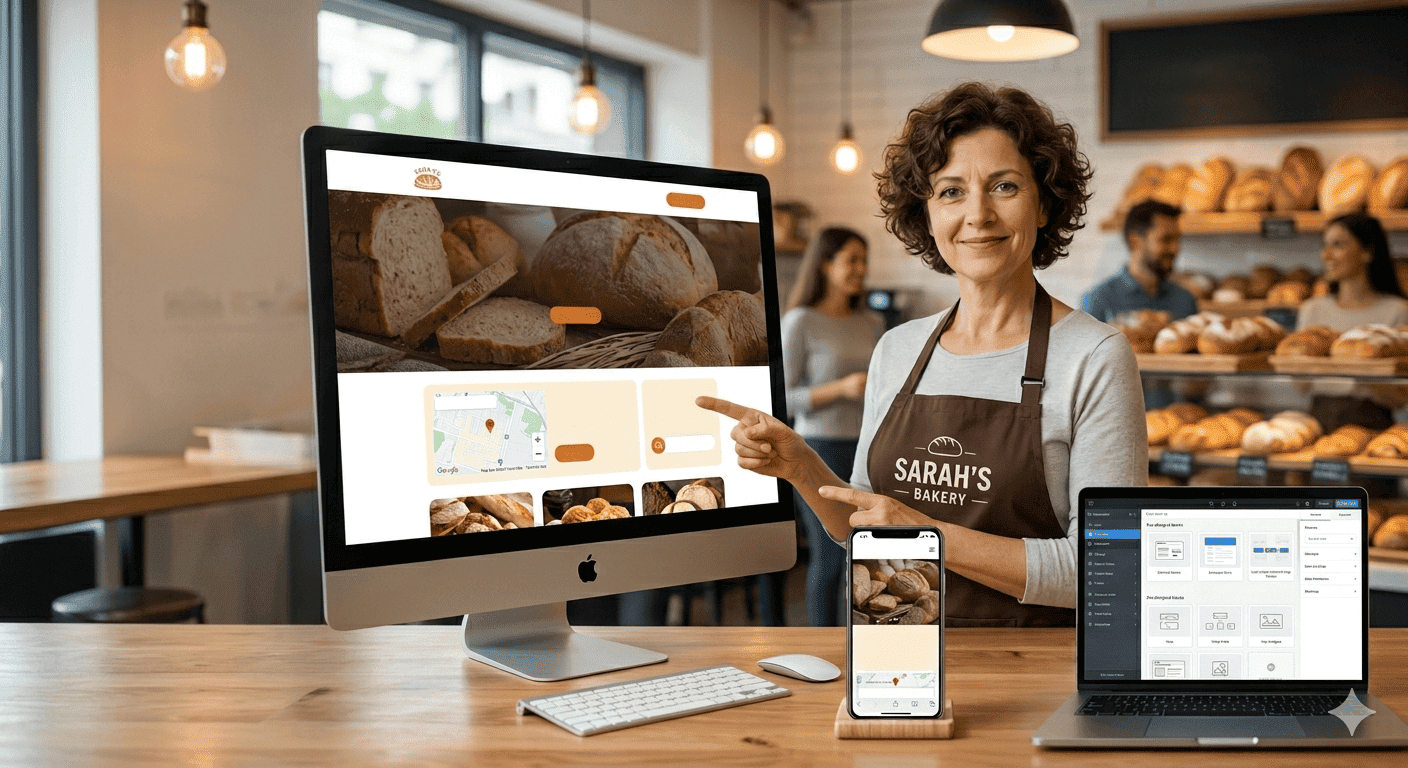
If you’ve been putting off building a website because you assumed “free” meant underwhelming, it’s time to reconsider. Free website builders have quietly gone through a massive transformation. What used to be a collection of rigid templates and frustrating limitations has evolved into something local business owners can genuinely rely on. In 2026, getting your small business website up and running, without spending a cent , is not just possible. It’s actually smart.
Why Local Businesses Are Rethinking Free Website Builders in 2026
Think about how your own customers find you. They don’t just ask a friend or stumble across your shop window anymore. They search on Google, scroll through results, and click on whatever looks most credible. If you’re not showing up, or worse, your online presence looks outdated, they move on.
Here’s what’s changed though. The free website builder space has matured significantly. Platforms that once offered bare-bones designs now give local business owners access to tools that genuinely compete with paid alternatives. The gap between free and premium has never been smaller, and for small businesses operating on tight budgets, that matters enormously.
Brand credibility used to require a significant investment. In 2026, it doesn’t have to.
The Biggest Ways Free Websites Have Evolved This Year
1. AI-Driven Personalization Is Now Built In
This one surprises a lot of people. AI-driven personalization, the kind of feature you’d expect from enterprise-level software, is now showing up inside free plans. What does that actually look like for a local business?
It means your website can show a different call-to-action depending on where a visitor is coming from. A customer who found you through a local search might see your address and hours front and centre. Someone clicking from your Instagram sees your latest offer instead. The customer journey becomes more relevant without you having to manually manage it.
It’s subtle. It’s smart. And it genuinely improves how people experience your site.
2. Mobile-First Design Is Now the Default
There was a time when “mobile-friendly” meant your desktop site didn’t completely fall apart on a phone screen. That bar has been raised considerably.
Today, mobile-first design means the entire layout, content hierarchy, and user experience (UX) is built for smaller screens from the ground up. Desktop comes second. This shift matters because the majority of local searches, think “coffee shop near me” or “plumber in [city]” happen on mobile devices. If your site loads awkwardly or forces people to pinch and zoom, they’re gone within seconds.
Modern free builders default to responsive web design, meaning your site adapts cleanly across every device automatically. That’s a significant win for any local business owner who doesn’t have a developer on speed dial.
3. Website Loading Speed Has Dramatically Improved
Speed is one of those things that people only notice when it’s bad. A site that loads quickly feels effortless. A slow one feels like a sign that the business behind it doesn’t have its act together.
Beyond perception, website loading speed directly affects your search engine rankings. Google factors page performance into how it ranks sites, which means a sluggish website is quietly dragging your organic traffic down. Free platforms in 2026 are tackling this with built-in performance optimisation, think content delivery networks, compressed images, and leaner code. You benefit from it without having to understand any of it.
4. No-Code and Low-Code Tools Have Made Building Accessible
You don’t need to know what HTML stands for to build something professional anymore. No-code and low-code platforms have genuinely democratised web design. Drag-and-drop editors, pre-designed section blocks, and intelligent layout suggestions mean that almost anyone can put together a clean, functional small business website in an afternoon.
This is a real shift. Building a website used to require either technical knowledge or budget to hire someone who had it. Neither barrier exists in the same way today.
Free Websites and Local SEO, A Powerful Combination
One of the strongest arguments for investing time in your free website is what it does for your local SEO. A well-structured site helps Google understand exactly who you are, where you operate, and who you serve.
Modern free builders support the kind of things that move the needle in local search, proper heading structures, page speed optimisation, integration with Google Business Profile, and the ability to create dedicated location pages. These aren’t advanced features anymore. They come standard.
More organic traffic from local searches means more people finding your business without you paying for ads every month. For a small business trying to grow sustainably, that’s a pretty compelling return on a free tool.
Built-In Features That Are Changing the Game
Voice Search Optimization
The way people search has changed. Full stops. People talk to their phones the way they’d talk to a person, “Where’s the nearest bakery open on Sunday?” Free websites built in 2026 are increasingly structured to answer these conversational queries, which helps local businesses show up in voice search results.
Progressive Web Apps (PWAs)
This is a term worth knowing. Progressive Web Apps allow your website to behave more like a mobile app, loading quickly, working offline, and even sending push notifications, without your customers having to download anything from an app store. For local businesses that want to stay top of mind, it’s a low-effort, high-impact feature that free platforms are starting to include.
AI Chatbots for Customer Engagement
An AI chatbot on your site handles the basic back-and-forth, opening hours, pricing questions, booking inquiries, even while you’re asleep. That kind of always-on lead generation used to come at a cost. Now it’s increasingly available as a standard feature, and it keeps your customer journey moving even when you’re not available.
Social Media Integration
Your website and your social channels should feel connected, not like separate islands. Social media integration means visitors can follow you, share your content, or log in through their existing accounts without friction. It extends your reach and reinforces your online presence across multiple touchpoints.
Security and Trust – No Longer Just a Paid Feature
Not long ago, getting an SSL certificate for your site meant paying extra. Today, it’s included in virtually every free plan worth considering. That padlock in the browser bar isn’t just technical, it’s a trust signal your customers actually notice. People are increasingly aware of website security, and a site that doesn’t look secure loses visitors before they’ve read a single line.
Website accessibility has also moved from “nice to have” to a genuine baseline expectation. Readable fonts, strong colour contrast, keyboard navigation support, these details tell visitors that your business pays attention. They also support better search engine rankings as accessibility and SEO continue to overlap.
How Free Websites Now Support Real Business Growth
Conversion-Focused Layouts
The best free website templates in 2026 aren’t just pretty, they’re engineered to move visitors toward a decision. Conversion-focused layouts place your call-to-action where people naturally look, answer objections before they arise, and reduce the number of steps between “interested” and “contacted you.”
Data Analytics Built Right In
Understanding how people use your site used to require separate tools and some technical setup. Now, data analytics is often built directly into free platforms. You can see where visitors come from, which pages hold attention, and where people drop off. That information shapes smarter decisions, about your content, your offers, and your overall marketing.
Content Management System (CMS) on Free Plans
A good content management system means you’re never dependent on a developer to make basic updates. Change your hours, add a new service, publish a blog post, it all happens through a simple interface. This kind of control matters for local businesses that need to stay current without adding to their costs.
What to Look for in a Free Website Builder as a Local Business
Before committing to any platform, run it through this quick checklist:
- Does it default to mobile-first design?
- Is an SSL certificate included at no cost?
- Does it support local SEO features like custom meta titles and Google Maps?
- Can you update content easily through a built-in CMS?
- Does it load fast on mobile, not just desktop?
- Is the interface genuinely accessible to someone without technical skills?
- Does it offer responsive web design across all screen sizes?
If a platform ticks these boxes, it deserves serious consideration regardless of the price tag.
The Future of Free Websites for Local Businesses Is Already Here
Free no longer means settling. In 2026, local businesses will have access to website tools that are fast, secure, intelligent, and built around real growth, not just aesthetics. The businesses taking advantage of this now are building an online presence that attracts customers, earns trust, and converts interest into action. If you haven’t revisited what’s possible with a free website recently, you might be surprised by how much has changed, and how much your business stands to gain.
Frequently Asked Questions
Can a free website rank on Google?
Yes. With proper local SEO setup, fast loading, and quality content, a free website can absolutely rank in Google search results, including local pack listings.
Are free websites good enough for local businesses in 2026?
For most local businesses, yes. Modern free builders include SSL, mobile-first design, CMS tools, and SEO features that are more than sufficient to build a credible, high-performing site.
Do free websites include SSL security?
Most reputable free website builders in 2026 include SSL certificates as standard. Always verify this before choosing a platform.
Can I build a mobile-friendly website for free?
Absolutely. Mobile-first design is now the default across most major free website builders, not an optional upgrade.
What features should a free website have for local SEO?
Look for customisable meta titles and descriptions, Google Maps integration, fast page load times, and the ability to create location-specific pages.